
Evaluating an Asset Manager
A Comprehensive Approach
Selecting an asset manager is a critical decision that requires careful analysis beyond just past performance. While historical returns may provide some insight, they are not always a reliable predictor of future success. Instead, a thorough evaluation should encompass multiple dimensions of a manager’s capabilities and approach.
Global Trust Company’s structured methodology ensures that we consider not only a manager’s track record but also their strategic vision, operational effectiveness, and alignment with investor interests.
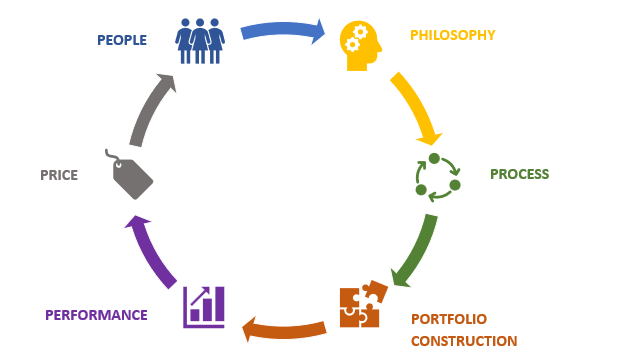
1. People: Assessing the Team Behind the Investments
The competence and stability of an asset manager’s team are among the most crucial factors in determining long-term success. A firm’s leadership, investment professionals, and operational support staff collectively influence decision-making and fund performance.
Key aspects to evaluate:
Team Composition and Experience: Does the team have diverse expertise, or is there a risk of groupthink?
Leadership and Management Stability: Is there a high turnover rate, which might indicate internal challenges?
Alignment of Interests: Do the managers have meaningful personal investments in the fund?
Firm Governance: How are decisions made, and what are the internal structures for oversight?
A well-structured and experienced team that operates with transparency and strong governance is more likely to generate consistent results over time.
2. Philosophy: Understanding the Investment Approach
An asset manager’s investment philosophy reflects their core beliefs about the market and how they generate returns. This philosophy should be clearly defined, consistent, and well-supported by past actions.
Critical questions include:
Market Focus: What sectors, asset classes, or geographies does the manager specialize in, and why?
Investment Differentiation: What is their competitive advantage over peers?
Risk Management Approach: How do they balance return generation with downside protection?
Value Proposition: Beyond capital, what additional value does the manager provide to portfolio companies or investments?
A strong investment philosophy ensures that decisions are not made arbitrarily or reactively but follow a structured, well-reasoned approach.
3. Process: Evaluating Execution and Decision-Making
A manager’s ability to implement their strategy effectively depends on their investment process—the methodology they use to identify, evaluate, execute, and exit investments.
Key considerations include:
Deal Sourcing and Origination: Does the manager have access to proprietary deal flow, or do they primarily compete in broad market auctions?
Investment Decision-Making: Who makes investment decisions, and how are potential opportunities vetted?
Portfolio Management: How involved is the manager in guiding portfolio companies or assets post-investment?
Exit Strategies: Does the firm have a track record of executing successful exits under various market conditions?
A well-defined process provides investors with confidence that the manager is disciplined, systematic, and capable of navigating market fluctuations.
4. Portfolio Construction: Balancing Diversification and Risk
A strong investment strategy must be complemented by prudent portfolio construction. The way an asset manager structures their portfolio has a direct impact on risk exposure and return potential.
Factors to assess include:
Fund Size and Investment Capacity: Is the fund appropriately sized for its strategy, or is it overly ambitious?
Diversification Strategy: Does the portfolio include an appropriate mix of investments across sectors, geographies, and asset types?
Concentration Limits: How much of the portfolio is allocated to a single investment, and is there a cap on position size?
Investment Timeline: How quickly does the manager deploy capital, and do they exhibit patience in selecting opportunities?
Effective portfolio construction ensures that returns are not overly dependent on a few investments and that the fund is resilient to sector-specific downturns.
5. Performance: Measuring More Than Just Returns
While performance is a key metric, it should not be evaluated in isolation. Investors should assess how returns have been achieved and whether they are sustainable over multiple market cycles.
Important areas to examine:
Historical Performance Across Market Cycles: Has the manager demonstrated resilience in downturns, or are returns primarily linked to favorable market conditions?
Realized vs. Unrealized Gains: Are the majority of returns based on actual exits, or are they driven by subjective valuation adjustments?
Attribution of Returns: Is success driven by operational improvements, financial engineering, or broader market trends?
Comparable Performance: How does the manager’s performance compare to industry benchmarks and similar funds?
A transparent discussion of performance should go beyond headline figures and provide clarity on the drivers of past returns.
6. Pricing: Evaluating Fees and Cost Structures
The structure of an asset manager’s fees and incentives can significantly impact net returns for investors.
Key pricing elements include:
Management Fees: Are fees competitive relative to the market, and do they reflect the level of active management?
Carried Interest and Performance Fees: Is compensation structured to align the manager’s success with that of investors?
Fee Flexibility and Negotiability: Are there provisions for early investors, long-term commitments, or large allocations?
Fund Expenses and Hidden Costs: Are there any additional charges that may dilute investor returns?
Investors should ensure that the fee structure is reasonable and incentivizes the manager to prioritize strong, long-term performance.
Conclusion
Selecting an asset manager requires a comprehensive evaluation of their team, investment philosophy, operational execution, risk management, performance, and fee structure. By applying a structured framework, investors can gain a more holistic view of a manager’s strengths and potential risks.
While historical performance is important, it should not be the sole determining factor in manager selection. A disciplined approach that considers the broader context—people, strategy, process, and alignment—will ultimately lead to more informed investment decisions.
By conducting thorough due diligence and ensuring that all elements align with their investment objectives, investors can increase their confidence in selecting a manager that is well-positioned for long-term success.
Disclosure
This newsletter is limited to the dissemination of general information pertaining to Global Trust Company’s Trustee Services. As such nothing herein should be construed as the provision of personalized investment advice. The information contained herein is based upon certain assumptions, theories and principles that do not completely or accurately reflect your specific circumstances. Information presented herein is subject to change without notice and should not be considered as a solicitation to buy or sell any fund. Adhering to the assumptions, theories and principles serving the basis for the information contained herein should not be interpreted to provide a guarantee of future performance or a guarantee of achieving overall financial objectives. As investment returns, inflation, taxes and other economic conditions vary, the funds’ actual results may vary significantly. Furthermore, this newsletter contains certain forward-looking statements that indicate future possibilities. Due to known and unknown risks, other uncertainties and factors, actual results may differ materially from the expectations portrayed in such forward-looking statements. Readers are cautioned not to place undue reliance on forward-looking statements, which speak only as of a specific date. As such, there is no guarantee that the views and opinions expressed in this article will come to pass. This newsletter should not be construed to limit or otherwise restrict Global Trust Company’s investment decisions.
This newsletter contains information derived from third party sources. Although we believe these third-party sources to be reliable, we make no representations as to the accuracy or completeness of any information prepared by any unaffiliated third party incorporated herein, and take no responsibility, therefore. Some portions of this newsletter include the use of charts or graphs. These are intended as visual aids only, and in no way should any client or prospective client interpret these visual aids as a method by which investment decisions should be made. We have provided performance results of certain market indices for illustrative purposes only as it is not possible to directly invest in an index. Indices are unmanaged, hypothetical vehicles that serve as market indicators and do not account for the deduction of management fees or transaction costs generally associated with investable products, which otherwise have the effect of reducing the performance of an actual investment portfolio. It should not be assumed that the fund’s performance will correspond directly to any benchmark index. A description of each index is available from us upon request.